





Handicap, formats and course strategy: the guide to scoring better
You can lower your score without touching your swing: by playing the right formats, picking the right targets and watching the right numbers. That is often where amateurs save the most strokes, the fastest.
To understand your level, start with how index and handicap work. Before a competition, read our guide to golf game formats. On the course, learn why missing on the right side saves strokes and how avoiding double bogeys lowers your handicap.
Index and handicap
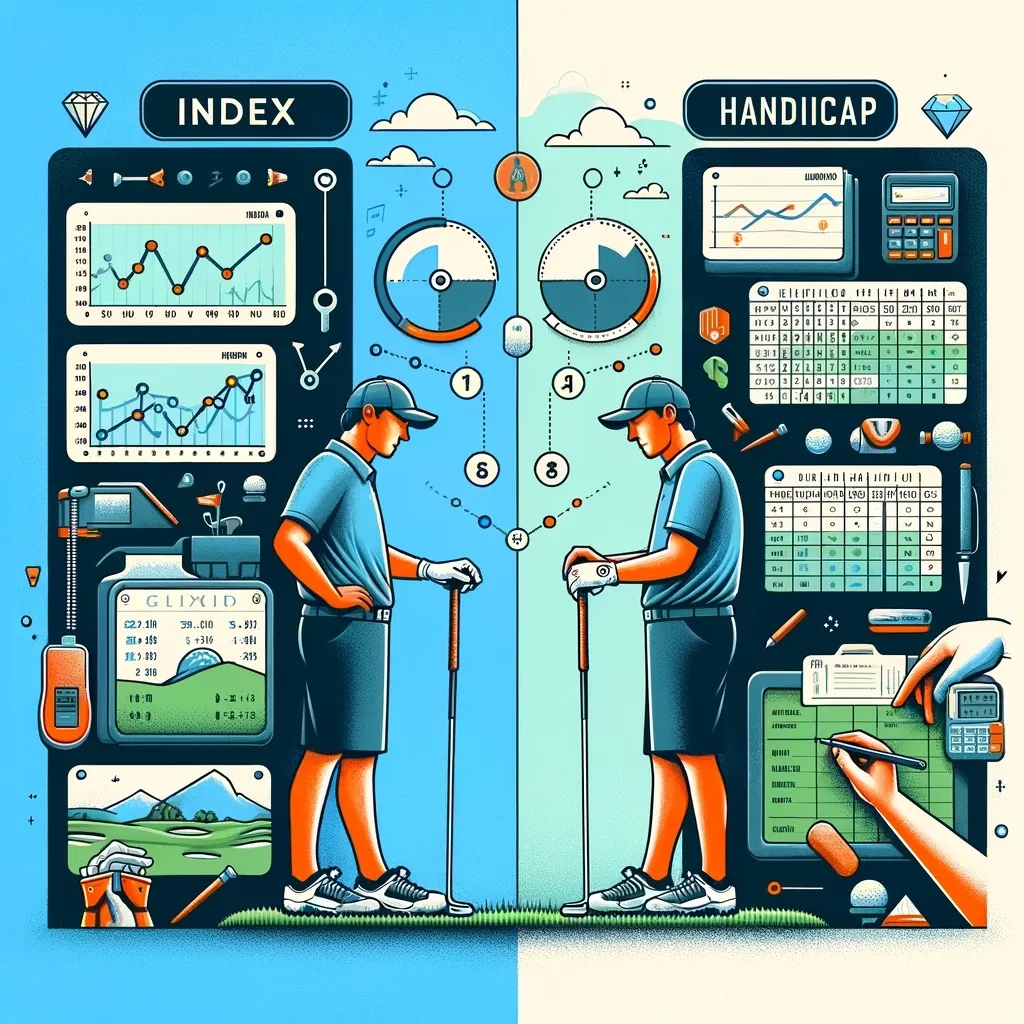
Understanding Golf Index and Handicap: How Course Difficulty, Slope, and SSS Ensure Fair Play and Track Your Improvement on the Golf Course
This article demystifies the concepts of index and handicap in golf, essential for measuring progress and ensuring fairness in competitions. The index, calculated from the best performances adjusted for course difficulty, reflects a golfer's playing potential. The handicap, adapted for each round according to the index, the slope, and the course SSS, levels the playing field between players of different skill levels. The slope assesses the difficulty of a course for a bogey golfer compared to a scratch golfer, while the SSS estimates the expected score of a scratch golfer. Understanding these elements allows golfers to set realistic goals, participate in fair competitions, and track their improvement, thereby enriching their golf experience through fair competition and clear development indicators.
The Real Way to Lower Your Handicap: How to Avoid Double Bogeys
If you want to lower your golf handicap, stop focusing on making more birdies — and start focusing on avoiding double bogeys. Birdies are great, but it’s the disasters that wreck scorecards. In this article, we break down the five most common causes of double bogeys (based on real data from amateur rounds) and show you how to adjust your strategy and mindset to keep the big numbers off your card — no matter your skill level.

How to Lower Your Golf Handicap with Smart Course Strategy: Manage Wind, Ball Trajectory, and Positioning for Better Performance Without Extra Practice
Improving your golf performance is not only about technique but also about a good strategy. This article explains how to lower your handicap without spending more time at the driving range, by focusing on key elements such as managing the wind, choosing between high and low balls, and the importance of positioning on the course. Adopt these strategies and gain strokes in every game.
Formats and tournaments

Guide to Golf Game Formats: Strokeplay, Stableford, Matchplay, Scramble, Foursome, Greensome, and Chapman Explained for Every Golfer
This article describes the golf game formats: Strokeplay (counts all shots), Stableford (points by performance per hole), Matchplay (hole-by-hole competition), Scramble (best team ball), Foursome (teams alternate playing the same ball), Greensome (choice of the best ball after the tee shot), and Chapman (exchange of balls then choice of the best).

Golf Tournament Formats Explained: Stroke Play, Match Play, Scramble, and hybrid formats like the Ryder Cup and the Presidents Cup.
This article presents golf tournament formats: Strokeplay in classic tournaments such as the four majors, Matchplay with the World Golf Championships as the main example, Scramble with tournaments like the PNC Championship and the Grant Thornton Invitational, and hybrid formats like the Ryder Cup and the Presidents Cup, mixing different types of play.

Master Golf Performance: How to Adapt Your Strategy and Mindset for Stroke Play, Stableford, Match Play, and Scramble Formats
Performance in golf does not depend solely on technique: the game format significantly influences the strategy to adopt. Whether you play stroke play, stableford, match play, or scramble, each format requires a specific mindset and tactical choices to maximize your results. In this article, we explain how to adapt your strategy for each game mode, focusing on risk management, the mentality to adopt, and best practices to perform regardless of the format. Become a more complete golfer by mastering the subtleties of each format!
How to Dominate a Scramble: Smart Team Strategy for Winning Golf
Scramble is one of the most enjoyable golf formats, especially during holidays or friendly tournaments. Simple in appearance, it’s the ultimate team-play version of golf — but to truly succeed, you need more than just good shots. You need a plan. This article breaks down how to play Scramble strategically, from tee to green. Learn how to assign roles, choose your shot order wisely, and build team momentum — because in Scramble, it’s not just about hitting good shots, it’s about playing smart as a unit.

Master Advanced Golf Tournament Strategies: Stress Management, Opponent Analysis & Tactical Play for Peak Performance Under Pressure
This article explores advanced strategies to excel in golf tournaments, focusing on stress management, opponent analysis, and tactical decisions. Advice on mental and physical preparation, managing crucial shots, and playing on the green are also covered to help golfers perform under pressure.
Course strategy

Mastering Golf Strategy: Essential Tips on Club Selection, Risk Management, and Shot Planning for Smarter Play
This article explores the basic principles of golf game strategy, including club selection, risk management, and shot planning. Practical tips are provided to help golfers become smarter and more effective on the course.

Mastering Golf Course Strategy: Hole Analysis, Club Selection, Risk Management and Lower Scores
Golf strategy is not just about hitting it far or straight. It is a thoughtful approach to the course that covers hole analysis, club selection, risk management and, above all, knowing your own statistics. Learn how to build a strategy that lowers your scores, shot after shot, whatever your level.

Why Missing on the Right Side Can Save Your Golf Score
One of the most common strategic mistakes among amateur golfers is missing the green on the wrong side — what’s known as the short side. This seemingly small error makes your next shot much more difficult. On the flip side, aiming intentionally for the fat side — further from the flag but safer — can drastically improve your consistency and scores. In this article, we explore why top players like Scottie Scheffler avoid chasing pins and how you can apply this strategy to your own game for better results.
How to Play a Dogleg Hole in Golf: Strategy, Aiming Tips, and Smart Decisions
Doglegs are those mysterious, bending holes that can make even experienced golfers pause on the tee box, wondering: “Where exactly am I supposed to aim?” The answer isn’t always obvious — but with the right strategy and a few key decisions, doglegs can become scoring opportunities instead of traps. In this article, you’ll learn how to read a dogleg, aim with purpose, and decide whether to play it safe or go for the corner.

Master Golf in Windy Conditions: 5 Essential Tips for Club Selection, Swing Adjustment, Aiming, Mental Control & Tech to Improve Your Score and Enjoyment
The wind turns every golf hole into a strategic challenge. To play better in these conditions, discover 5 concrete tips: club selection, swing adjustment, aiming strategy, mental control, and use of technology. With simple gestures and thoughtful decisions, you will be able to stay in control, even in gusty conditions. Learn to read the wind and use it to your advantage to improve your consistency, your score, and your enjoyment of the game.

Adapting Your Golf Strategy to the Weather: Practical Tips for Wind, Rain, Heat and Cold
Practical tips to adapt your golf strategy to the weather: specific techniques for playing in wind, rain, heat and cold so you keep your performance on the course.
Stats that lower your score
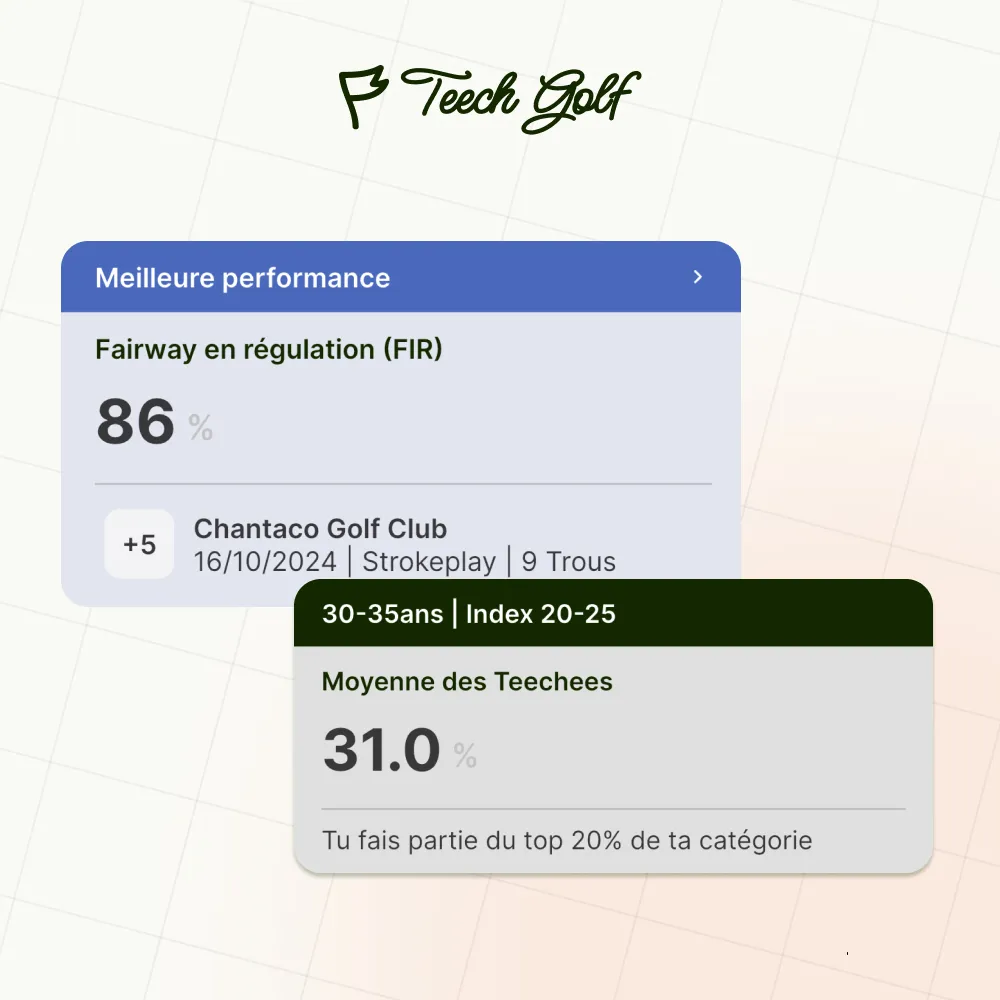
Why Strokes Gained Fails Amateurs: Simple, Personalized Stats for Real Golf Improvement and Motivation
Strokes gained is a flagship indicator of the PGA Tour, but it is unsuitable for amateur golfers. Too complex, demotivating, and disconnected from the reality of the course, it does not allow for concrete progress. Instead, simple and personalized statistics such as greens in regulation or putts offer effective avenues for improvement. Comparing one's game to that of peers, rather than pros, also strengthens motivation. Discover a more realistic and useful approach to progress with pleasure.

Inside the Game: Interview with Robin Cocq, Golf Coach Specializing in Performance Strategy and Statistical Analysis Supporting Top European Tour Players
Exchange with Robin Cocq, golf coach specialized in performance strategy and statistical analysis. He supports several players on the European Tour, including Ugo Coussaud, Matthieu Pavon (winner on the PGA Tour), and Perrine Delacour.

From Data to Progress: How to Use Your Stats to Train Smarter in Golf
Collecting golf stats is easy — most apps do it for you. But using those stats to actually improve your game? That’s where the real value lies. This article breaks down how to turn numbers into action. We explore the mindset and method behind smarter practice: identifying your real weaknesses, setting targeted training goals, and measuring progress. Because hitting balls at the range isn’t enough — you need a feedback loop if you want to drop strokes and play better.

How Statistics and Advanced Technology Are Changing Performance and the Fan Experience in Professional Golf
Statistics play a key role in professional golf, helping players optimise their performance and make strategic decisions. Tools like TrackMan and Arccos provide detailed swing and game data for precise analysis and personalised training, and statistics also enrich the fan experience.
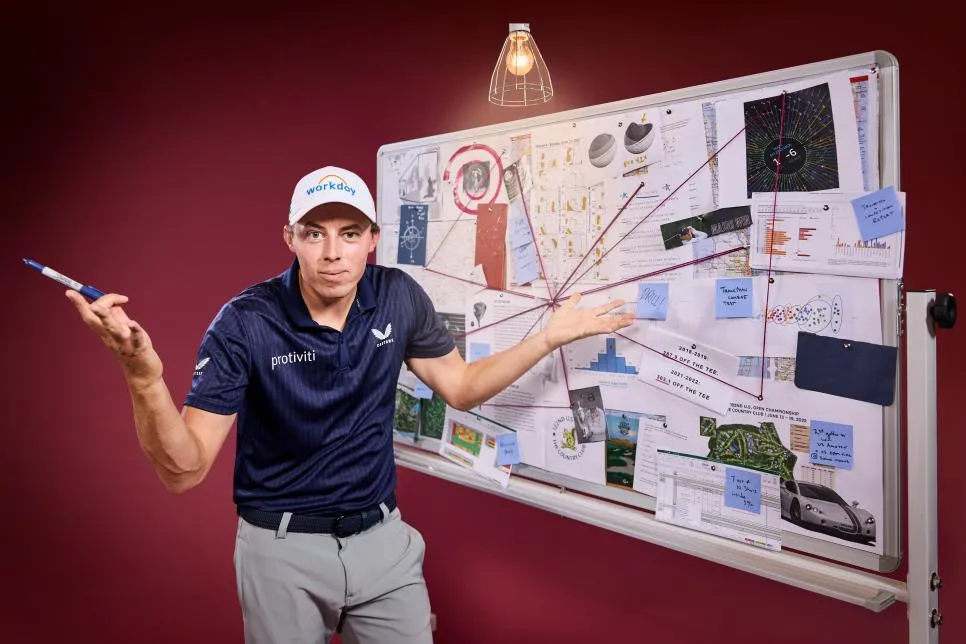
How Matt Fitzpatrick Uses Data and Statistics to Optimize His Golf Performance and Gain a Competitive Edge
Matt Fitzpatrick uses statistics to optimize his golf performance. By analyzing key data such as strokes gained and putting statistics, he adjusts his training and game strategies. This data-driven approach allows him to remain competitive at the highest level and to constantly improve his game.
Other guides
- Green card & rules
- Putting
- Driver & distance
- Shank & irons
- Bunker & short game
- Mental game & practice
Lower your scores with Teech Golf